

Inside Tasmania's surf lifesaving community
Each summer, volunteers hit the sand to protect swimmers, teach surf skills and keep our beaches safe for everyone.
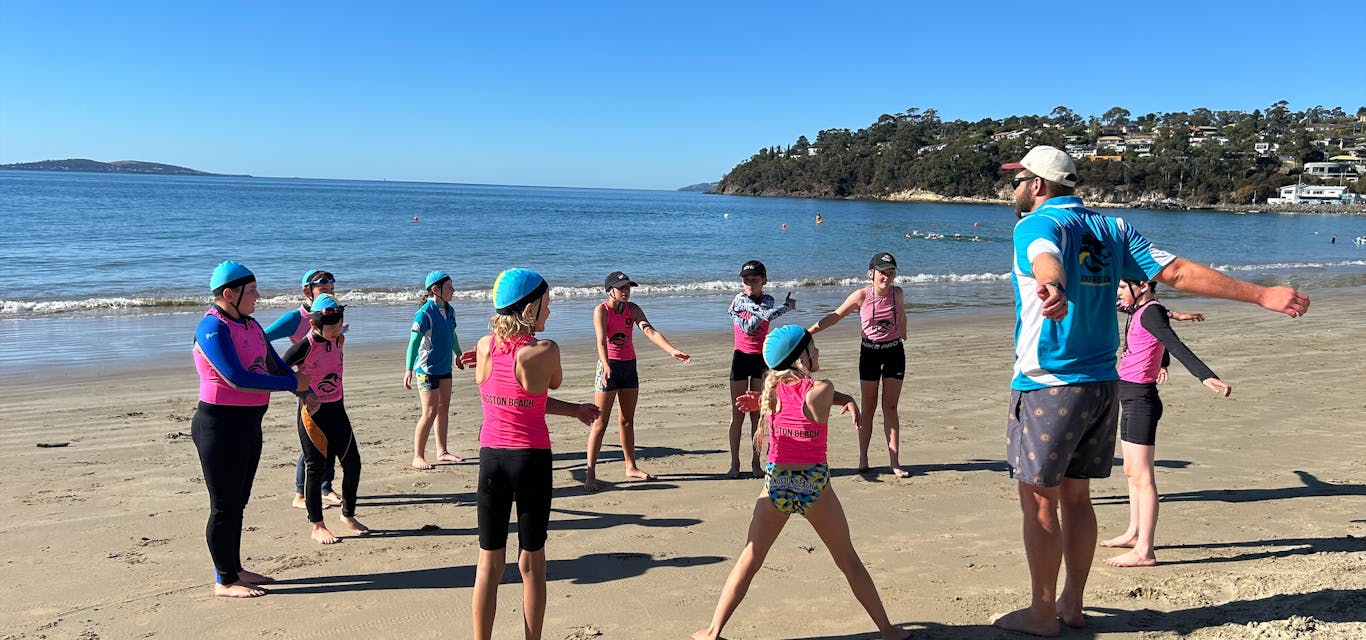
Every Sunday morning during the summer months, the Fitchett family head to Kingston Beach so that Oscar, 11, and Dakota, 8, can take part in the Nippers program.
Mum Marley is the Junior Activities Coordinator at the local surf club, while dad Will is on the sand, coaching the young nippers in critical skills that will set them up for a lifetime of lessons around water safety.
Marley loves her surf club. The family are back again this summer for their fourth season.
“Moving to Hobart without family nearby, the surf club has become a family for us,” she says. “The sense of community among our members is astonishing. Nothing beats Sunday mornings at the beach surrounded by our surf club family, hearing the kids laugh, seeing their excitement when they catch a wave.”


As well as friendships formed, Marley derives joy from being part of an organisation with such a valuable role in the community.
“It’s knowing that by playing even a small part, we’re contributing to something much bigger; a club that keeps people safe, builds resilience and creates a sense of belonging,” Marley says.
Tasmania’s Surf Life Saving movement began on the North West Coast, where the first club was established in Burnie in 1921. A club followed in Devonport in 1927, while the Ulverstone club opened in 1928.
Today, the state is home to 15 clubs, three marine rescue units and a number of support operations. Newer clubs include the Kingston Beach Surf Life Saving Club, which was formed in 2009 and Raspins Beach Surf Life Saving Club, which was founded in 2018.
From patrolling members, search and rescue teams, jet ski teams, flood and swiftwater rescue and emergency response teams, the state’s 3100 members are quite literally the guardians of summer.
“The sense of giving back to the community and having the skills that could help people in times of need is what brings our volunteers to the beach each summer,” Surf Life Saving Tasmania’s CEO Tony van den Enden says.
“Our surf life savers also undertake thousands of preventative actions on beaches across the state every year, which is where our members communicate with beachgoers or those on the water about a potentially dangerous situation before they need to be rescued. This could be that they have entered a dangerous situation, they’ve become caught in a rip, or we have moved them out of an area where the conditions have changed.”
DID YOU KNOW?
Surf Life Saving is the largest volunteer movement and the largest youth movement in Australia, with just over half of its membership under 18 years of age.
Aside from the surf life savers in red and yellow seen patrolling 15 of Tasmania’s most iconic beaches, more than 1200 kids aged between five and 14 go through the Nippers program to learn vital lifesaving skills.
These skills are tested on young surf lifesavers at interclub carnivals, held throughout the summer months on Tasmanian beaches, putting their skills to the test in a competitive space against the elements.
“The carnivals are what keep our members rescue-ready so they can read the conditions, stay fit and be sure they can get out quickly to a person in challenging conditions,” Tony says.
Clubs also run community programs, including the Starfish Nippers program, which provides a safe place for children living with disabilities to enjoy time in the water.
The clubs are also focused on how to turn the tide on cultural drownings, which are over-represented around the country.
One of the state’s most dramatic rescues in years featured on ABC’s Australian Story this year when two Surf Life Saving Tasmania Swiftwater Rescue members played a pivotal role working with Tasmania’s emergency services to perform one of Tasmania’s most complex remote rescues.
Experienced Lithuanian adventurer Valdas Bieliauskas fell into the remote Franklin River, triggering an extraordinary rescue mission that resulted in his leg being amputated to save his life.
For members, it’s the sense of family that keeps them coming back each season. Penguin Surf Life Saving Club life member Ken Knight has trained five generations over his lifetime. Now aged in his nineties, club members recently helped him relocate into a new home.

Carlton Park, which was named Australian club of the year in 2025, has been serving the community for 50 years. Club President Dean Harris says the club is focused on youth retention pathways, developing opportunities across lifesaving, training and surf sports.
“We pride ourselves on being an open and welcoming club that is focused on giving the very best experience to our members, from nippers and their parents to seniors, competitors and patrolling members,” Dean says.
But as a community organisation, support from the community is paramount.
“So much work goes in to generate funds and discretionary revenue streams to pay for these services to provide these safe beaches, paying to replace gear and equipment, and provide development opportunities for our members,” he says.
"Volunteers are at the heart of our clubs."
"They pay a membership fee for the privilege of providing safe beaches in patrol hours. We just want people to go into our waterways and enjoy them safely. Ultimately, we have also proven ourselves to be a very resilient club. Our members are always there for each other.”
Surf Life Saving is a club for anyone.
“Whether you can swim, you want to go in the water or not, there’s a pathway for everyone who wants to have a meaningful involvement and an involvement with awesome people,” Tony says.
“If you haven’t thought about it, come down and have a go, you won’t be thrown into things straight away and you’ll be able to join a family of amazing people who want their community to be safe in and near the water.”