

Published | 31 July 2026
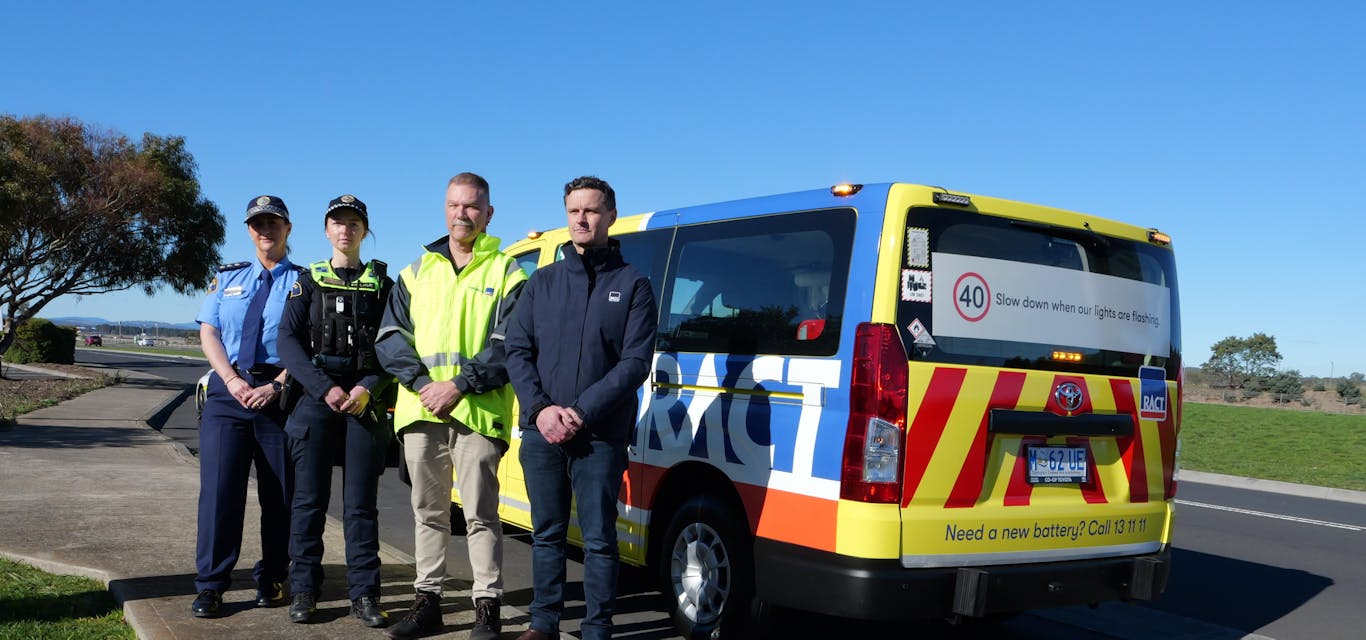
RACT is reminding Tasmanian motorists to slow down when passing roadside assistance vehicles, as its patrols continue to face dangerous situations while assisting stranded motorists on the side of the road.
Chief Mobility Officer Dean Harris said it had been nearly four years since Tasmania extended its slow down laws to include roadside assistance vehicles displaying flashing yellow lights.
"Too many motorists are still failing to slow down, putting roadside workers, emergency responders and vulnerable road users at risk. This is especially true at dusk, when its dark and in wet weather," Mr Harris said.
"Our roadside assistance patrols have rescued over 75,000 drivers over the past year and regularly work just metres from fast-moving traffic while responding to breakdowns across the state.
"Most Tasmanians don't go to work expecting vehicles to speed past them just metres away buy for our patrols, that's the reality every day.
"Those flashing yellow lights aren't just a warning, they're a sign that someone is working on the roadside and needs space to do their job safely."
"We're asking every motorist to slow down and give roadside workers the space they need. Slowing down isn't just the law; it's one of the simplest things you can do to help save a life."
Under Tasmania's road rules, motorists must slow to 40 km/h when approaching or passing stationary or slow-moving emergency response or roadside assistance vehicles displaying red, blue, yellow or magenta flashing lights on roads with speed limits of 80 km/h or less.
On roads with speed limits above 80 km/h, drivers must slow to 40 km/h unless it is unsafe to do so. If they cannot safely reduce to 40 km/h, they must slow as much as possible while passing the incident safely.
Mr Harris said following these road rules was essential to protecting everyone whose workplace was the roadside.
"It's not unusual for our patrols to have vehicles pass them at speed while they're helping someone stranded on the roadside," Mr Harris said.
"Our staff respond to breakdowns on busy highways, narrow country roads and suburban streets every day, often with little more than flashing lights separating them from passing traffic.
"Whether it's a roadside assistance patrol, tow truck operator, police officer, firefighter or paramedic, everyone working on the roadside deserves to get home safely at the end of their shift."
Slowing down around roadside incidents takes only a few seconds, but it could save someone's life."