

Published | 7 July 2026
As many Tasmanians head off on school holiday adventures, RACT is reminding motorists that winter safety starts with a road-ready vehicle, as black ice, fog and wet roads create extra hazards across the state.
RACT Head of Roadside Josh Dobie said winter conditions combined with increased holiday travel mean drivers need to be alert, prepared and patient behind the wheel.
The road safety message is particularly critical, with 17 people killed and 142 people injured on Tasmanian roads since January this year.
"Winter driving in Tasmania can be unpredictable, with wet roads, fog, frost and black ice all common at this time of year. Every Tasmanian on the road is someone's family, so it's on all of us to slow down, stay alert and look out for one another," Mr Dobie said.
"When you add in increased traffic over the school holidays, it's really important that drivers slow down, plan ahead and make sure their vehicles are safe and road-ready before they travel."
Mr Dobie said Tasmania's winter conditions could change quickly, particularly in inland, rural and elevated areas.
"Winter driving can be challenging, with fog, rain and shorter daylight hours reducing visibility and affecting our perception of road conditions," he said.
"When visibility is limited, we encourage all Tasmanians to slow down and increase the distance between themselves and the vehicle in front.
“We also want people to Slow Down for Yellow. Yellow flashing lights can mean an incident and services are on the road to assist. Slowing down for yellow flashing lights will help keep these workers safe while they’re assisting. This is also true of 40kmh signs, which usually tell you that there is a hazard ahead.”
Mr Dobie said vehicle condition was just as important as driver behaviour in winter safety.
"A major issue we continue to see is poor tyre condition, which can contribute to aquaplaning on wet roads and result in a total loss of control," he said.
"Motorists should ensure tyres have at least 1.5 millimetres of tread across the entire surface and that tyre pressures are correct, as under-inflated or over-inflated tyres can affect handling and increase wear."
"Unfortunately, colder weather is also when battery failures become more common, so it's important to ensure your battery is in good condition before heading away on longer trips.
"Winter driving in Tasmania takes a bit of extra care, but a little patience and preparation goes a long way. Let's look after each other out there and make sure everyone arrives safely, wherever the holidays take them."
"If your vehicle hasn't been serviced in the past 12 months, now is the time to book it in."
RACT is reminding drivers that safe winter travel starts with preparation as well as cautious driving.
Winter road safety tips
Drive to the conditions and reduce speed in wet, icy or low-visibility situations.
Slow down for yellow – if there are yellow flashing lights there are likely to be people on the road. Slow down.
Increase following distance to allow for longer stopping distances.
Be alert for black ice, particularly on bridges and shaded roads.
Use headlights in poor visibility, including rain and fog.
Avoid sudden braking, steering or acceleration.
Never drive through floodwater.
Winter car safety checks
Check tyre tread and pressure for wet and slippery roads.
Test your battery, which can be affected by cold weather.
Ensure windscreen wipers and washer fluid are in good condition.
Check that lights and brakes are working properly.
Pack emergency supplies for longer or regional trips, including warm clothing and water.
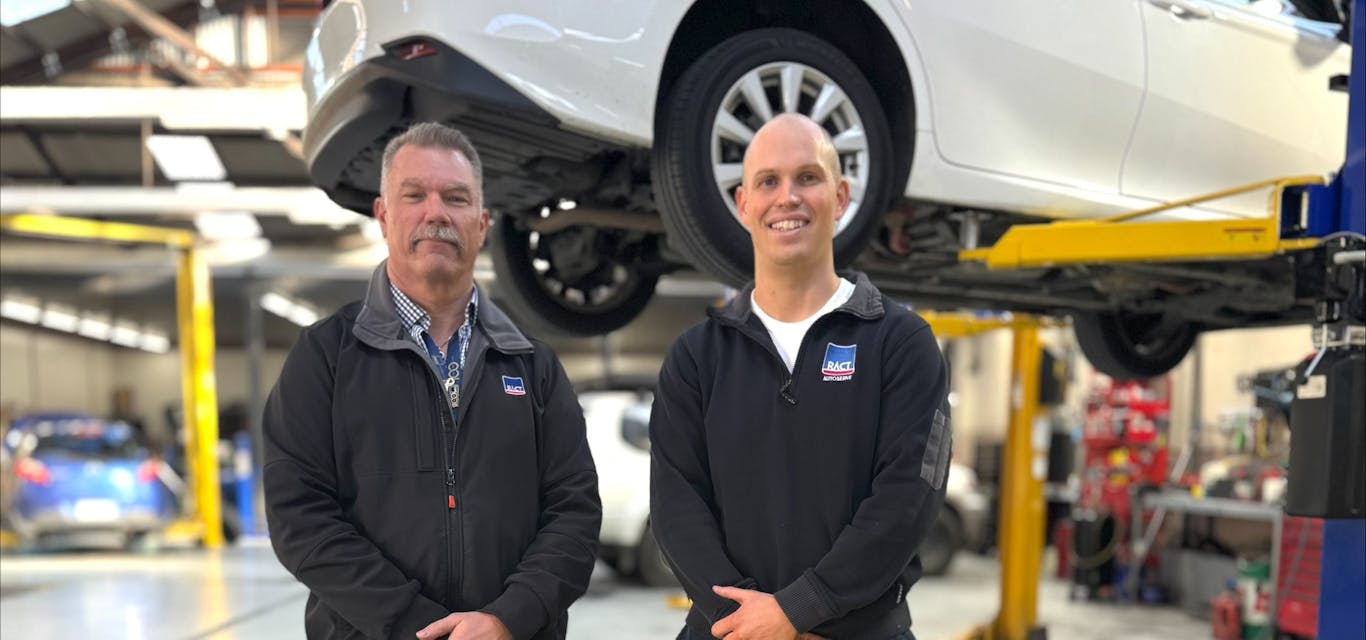
Header image, from left: Josh Dobie, RACT Head of Roadside and Liam Grundy, Autoserve Hobart Service Manager.